If you are exploring injectable treatments in Virginia Beach, you have probably come across two of the most popular options: Botox and dermal fillers. In the botox vs fillers conversation, the two are often mentioned together, yet they work in very different ways and address different concerns. Both are minimally invasive and popular partly because they require little to no downtime. At Optimal Well MD, Dr. Nancy Ferrel and team help patients understand these differences so they can make confident, informed choices about their care.
Ready to book your Botox or Filler appointment in Virginia Beach? One consultation clarifies which treatment actually addresses your concern.
Book Your Botox or Filler Appointment See Botox or Filler details & pricing
Botox vs. Fillers: The Core Difference
The simplest way to understand these treatments is by what they actually do. Botox is a neuromodulator that temporarily relaxes specific muscles, softening the lines that form when you make facial expressions. Dermal fillers, by contrast, add volume beneath the skin to smooth folds, restore fullness, and refine contours.
In short, Botox addresses movement, while fillers address volume. Neither treatment is permanent, so results can be refined over time as your preferences evolve. Many patients find that the two can complement each other beautifully, but understanding what each one does is the first step toward a treatment plan that truly fits your goals.
How Botox Works
Botox is typically used on the upper face, where repeated muscle movement creates what are known as dynamic wrinkles. Common treatment areas include the frown lines between the brows, horizontal forehead lines, and crow’s feet around the eyes.
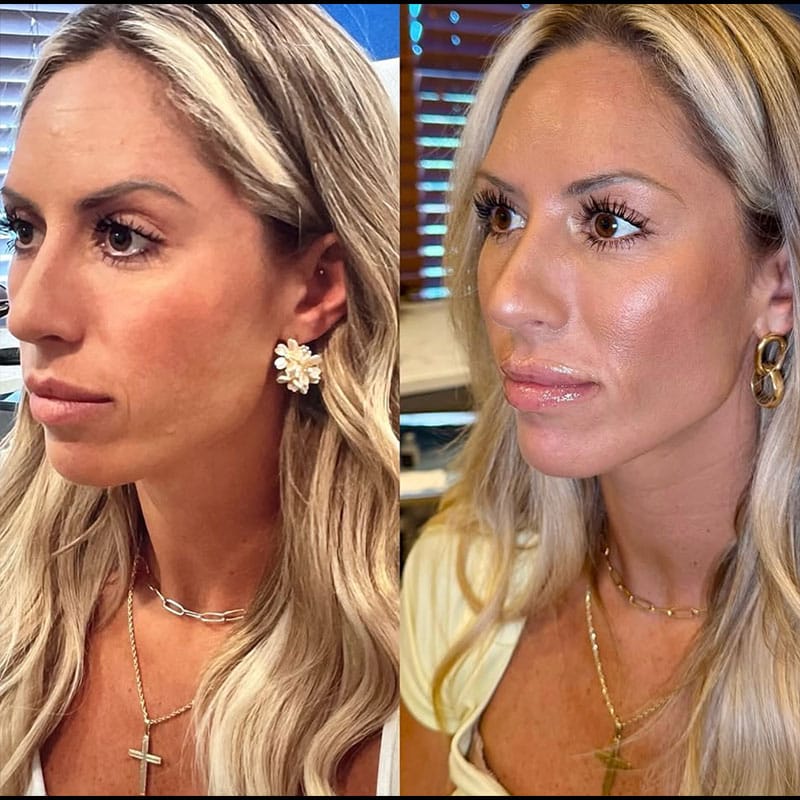
By gently relaxing these muscles, Botox can soften the appearance of existing lines and may help slow the deepening of new ones over time. Results generally appear within about two weeks and typically last three to four months before gradually fading. Because the effect is temporary, many patients return for maintenance a few times a year to keep their results looking consistent. Temporary side effects can include mild redness, swelling, or small bruises at the injection sites, which usually resolve quickly.
How Dermal Fillers Work
Dermal fillers are used to restore volume that can be lost with age or to gently enhance specific features. Many fillers are made from hyaluronic acid, a substance that occurs naturally in the body and helps the skin hold moisture and structure.
Fillers are often placed in the mid to lower face, such as the cheeks, the folds that run from the nose to the mouth, and the lips. Depending on the product and the area treated, results may last anywhere from several months to well over a year. One reassuring feature of many hyaluronic acid fillers is that, in certain situations, they can be adjusted or even dissolved by a qualified provider. As with any injectable, temporary swelling or bruising can occur and generally settles on its own within a few days.
Which One Is Right for You?
The best choice depends on what you would like to address. If your main concern is expression lines caused by movement, Botox may be the better starting point. If you are hoping to restore lost volume, soften deeper folds, or add gentle definition, fillers may be more appropriate.
A few considerations can help guide the decision:
- Whether your concern involves movement lines or volume loss
- The specific area of the face you want to address
- How long you would like your results to last
- Your overall goals and comfort with each treatment
Because every face is unique, a personalized consultation is the most reliable way to determine which option, or combination of options, suits you best. Your provider can also review your history and expectations to help set a realistic, comfortable plan.
Can You Combine Botox and Fillers?
Yes. Many patients choose to use both, since they target different concerns. A thoughtful, balanced approach might use Botox to soften upper-face expression lines while fillers restore volume or refine contours elsewhere. This is sometimes described as a comprehensive approach to facial rejuvenation.
When combined carefully by a qualified provider, the goal is always a natural, refreshed look rather than an overdone one. Your provider can help you decide whether treating everything at once or spacing sessions out over time makes more sense for you. You can explore your options for injectable treatments during a consultation.
Personalized Injectable Care in Virginia Beach
Both Botox and dermal fillers can be valuable tools, but they are not interchangeable, and results vary from person to person. A consultation allows Dr. Nancy Ferrel and team to assess your facial anatomy, listen to your goals, and recommend an approach designed around you.
If you are weighing botox vs fillers and are not sure where to begin, the best next step is a conversation with a qualified provider. Taking time to ask questions and understand your options helps you feel comfortable and confident before moving forward. Feel free to contact Optimal Well MD to learn more.
Ready to take the next step? Book your free aesthetic consultation online and pick a time that works for you.
Book Botox or Filler at Optimal Well MD
Physician-led care with Dr. Nancy Ferrel and team in Virginia Beach. Same-week appointments are often available.
This article is for general educational purposes and is not medical advice. Treatments referenced require evaluation by a qualified provider. Individual results vary. Please consult Optimal Well MD or your physician about your specific situation.